006·Co-Owner, Coffee Sarap·Denver, Colorado·Published May 2026·8 minutes
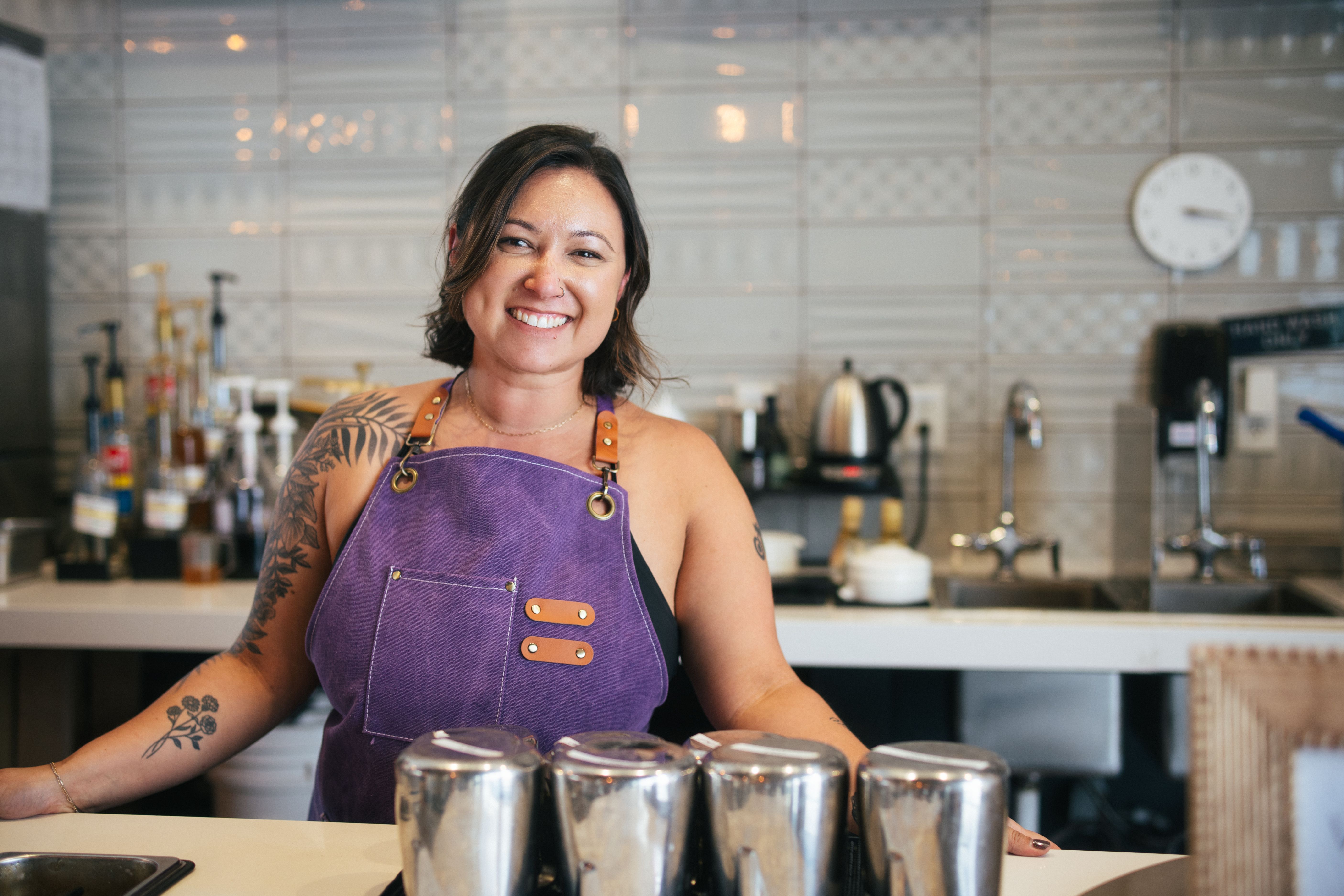
Portrait of Chelsey - Coffee Sarap

I taste home. This actually tastes like ube, not like vanilla.

Is this you and your partner's first business?

Yes. We started actually as a mobile cart. We're two stay-at-home parents and we were like, oh, our kids are getting a little older, they're going to be in school soon, maybe we can do something on the weekends. So we took this old hot dog cart and turned it into a coffee cart. The whole idea was to start out as a food truck, but a coffee truck. That upfront cost was a lot, like 30 grand just for the food truck. When we found this coffee cart for five grand on Facebook Marketplace, we were like, okay, this is very low overhead. We don't have to get a loan or anything.

Then we did it for three years until we could make up enough. And then this space happened to show up. It was an old coffee shop, so second generation, had all the bones and the plugs and everything. We hit our first year January 11th.

What was the calculus of "we're ready" to jump to brick and mortar?

We did a lot of podcasts, books, because this was so new to us. When we started, we always wanted it to be bigger, but we didn't think we'd be able to do it within the timeline we've done it in. We took things from each. One was the *Profit First* book, where you allocate a certain percentage of any money that comes in: operating expenses, taxes, equipment, emergency savings. That was really helpful because we could see, no, you can only take whatever's in here for operating expenses. Anything left over goes into our profit.

Once we hit our goal number, that's when we were like, okay, now we can see how this would work. We got a small business loan, and when you get one, you have to do financial projections, a pitch deck, a business plan. So that helped us figure out, okay, is this doable?

What was the calculus of "we're ready" to jump to brick and mortar?

We did a lot of podcasts, books, because this was so new to us. When we started, we always wanted it to be bigger, but we didn't think we'd be able to do it within the timeline we've done it in. We took things from each. One was the *Profit First* book, where you allocate a certain percentage of any money that comes in: operating expenses, taxes, equipment, emergency savings. That was really helpful because we could see, no, you can only take whatever's in here for operating expenses. Anything left over goes into our profit.

Once we hit our goal number, that's when we were like, okay, now we can see how this would work. We got a small business loan, and when you get one, you have to do financial projections, a pitch deck, a business plan. So that helped us figure out, okay, is this doable?

A year later, how are the projections?

Now that we have our liquor license, expenses are higher. But hopefully the ROI is going to be even higher. And because we're the only Filipino coffee shop in the Denver area, and we were the first one to ever open, we're kind of a destination now. We're right off I-70, so coming from the airport it's like, oh, there's a cool coffee shop. The location was pretty key. And our drinks are super vibrant, the Instagrammable appeal. That helped us go viral.

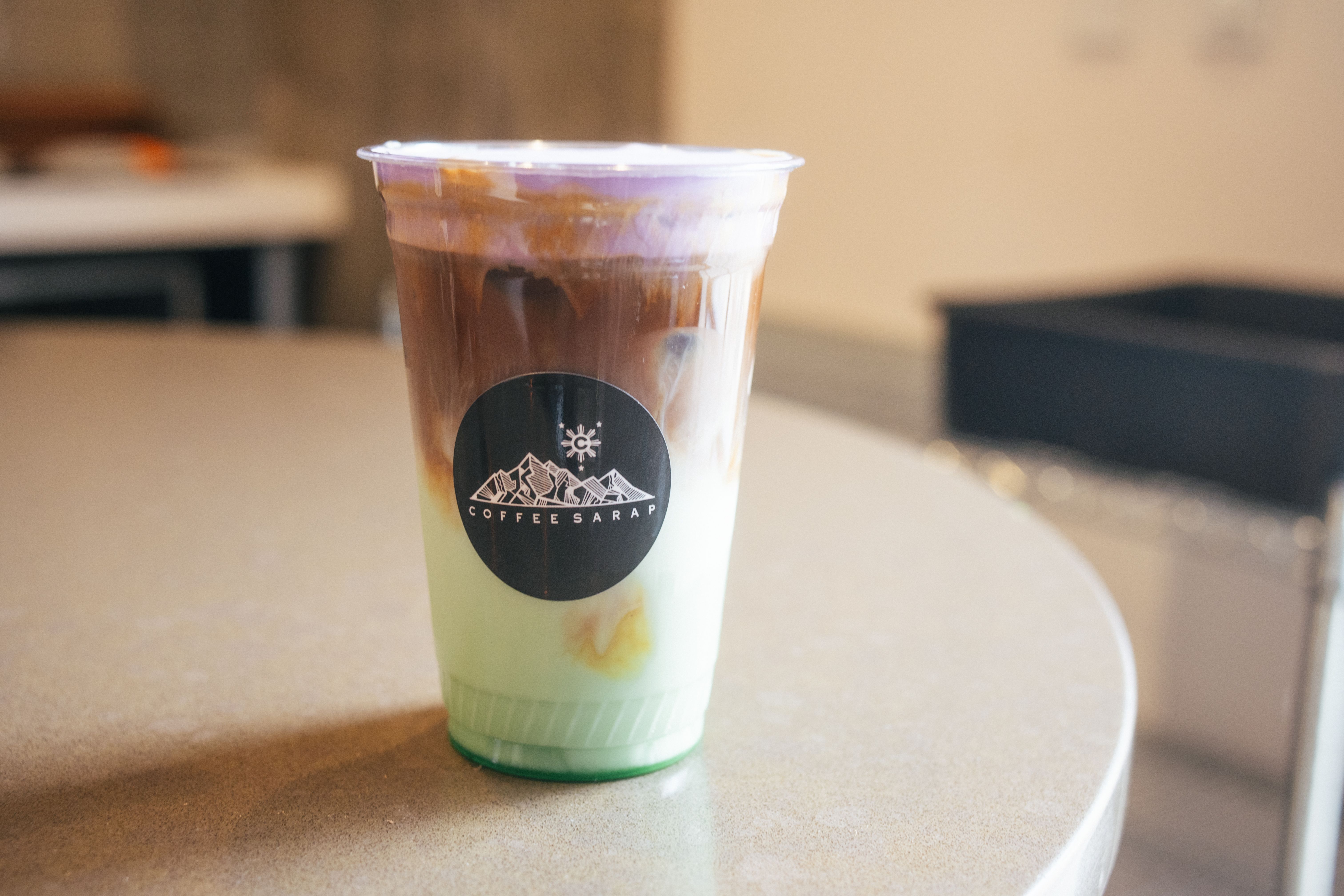
Coffee Sarap Drink

The place is gorgeous. I kind of feel homesick being inside here.

That's what we wanted you to feel. Both of us are from Seattle. Our parents are from Manila, but we grew up going to all the Filipino parties, all the cousins and titas. When we both moved out here, we were like, where are our flavors? So we were like, okay, I guess we have to create it. That's why we created Coffee Sarap, because we were tired of figuring out how far we had to go just to get an ube latte, or pandesal, or anything like that.

So you guys grew up together?

We grew up in the same area. She actually moved. She knows my cousin who I used to live next door to. The one who did my mural, it's her little brother. Me and him, people thought we were twins because we're 19 days apart. That's who my business partner kept in touch with. I moved out here first, and then she moved out here during COVID. She had a new baby, I still had a young baby during COVID, and you had your pods. My cousin was like, hey, you guys should meet up, do a play date. Come to find out, we grew up in the same area. She just moved right before her first year of high school. We're technically a year apart, but actually only months. She just had a later birthday and I had a summer birthday.

The virality you guys got, was that engineered at all? Was there a growth strategy?

Maybe yes and no. My business partner's background is actually culinary. Before this and before being a stay-at-home parent, she was a private chef. So when it came to recipes and aesthetics and making everything look the way it does, that's my business partner. She had more of a grasp on social media, the algorithm and all that.

My background is equity and diversity in education. I used to be an administrator for the school district, teaching teachers how to teach kids that don't look like them, how to honor their culture and bring each strength from everyone into the classroom. And because I went to University of Hawaii, I was in the Filipino club, very proud of my Filipino heritage. So we put our minds together. We wanted this to be more than coffee. Yes, that's the pull, that's the niche, that's the product. But what's our anchor? What are our values? We narrowed it down to community, culture, and then coffee. In that order. Coffee's last, but it's the thing people come to see. When they come in, the hope is you feel like, I taste home. This actually tastes like ube, not like vanilla.

I'm so lucky to have a business partner. I don't think I could do all this stuff by myself. A lot of people struggle with having a business partner that's your friend too. We just made it work.

Have you had to compromise at all because of the clash between your ideals and the realities, like with how you wanted to treat employees versus how it ended up?

Yes and no. It sucks that we live in a society that looks at employees as an expense versus an investment. One thing I told my staff is, I look at you all as an investment. Now, can I invest the amount of capital I want to in you all? I can't. The first thing we take from is mine and Hannah's paychecks. We work 80-plus hours a week. There's no guilt here. This is the mindset I'm going in with. But you have to understand how small of a business we are. You worked for corporate Starbucks or whatever, we don't have that kind of backing.

After our first year, we made pretty significant profit. So the first thing we did was create a profit-share program. We put a certain percentage of profit back to our employees, distributed based on hours worked. It was explained: this is essentially a bonus. We do this quarterly. Just know that profit changes every quarter. So if you don't see it, what are we going to do as a team? How do we get more people in the door? That's where the collaborative part comes in. Hannah and I are transparent: we have young kids, we do all the school drop-offs, we don't have all the time. If our employees have suggestions, do they want to take that on? Do you want to be a part of this growth? If you are, and you're here to sacrifice like we do, we are going to groom you to help take over one of our spots. But you have to be patient. And do you have the capacity to be patient? Because financially you might not be able to, and that's okay.

We've gotten creative with a lot of our staff, really utilized their strengths to create other positions, so they can still work but not just be a barista the whole time. One of our staff is very good at hosting events, so we have them as an events coordinator. They have two jobs: barista and events coordinator. They're allotted hours for events coordinating. Another one is now our bar lead, still a barista, but taking over implementing everything for the bar. We're giving them the opportunity to work with other restaurants so they can understand: what kind of sheets do I need, inventory log, all the things. Another just told us they're willing to step up on social media. And then something as not low, because it's very important: the plants. Somebody took on being our plant person, making sure they're watered and fed, growing in the right sunlight. We got a humidifier for it. Being a barista can be exhausting. With the volume we have, you can see the burnout. We figure out a way that you still feel like you're part of the team and your creative mind keeps going.

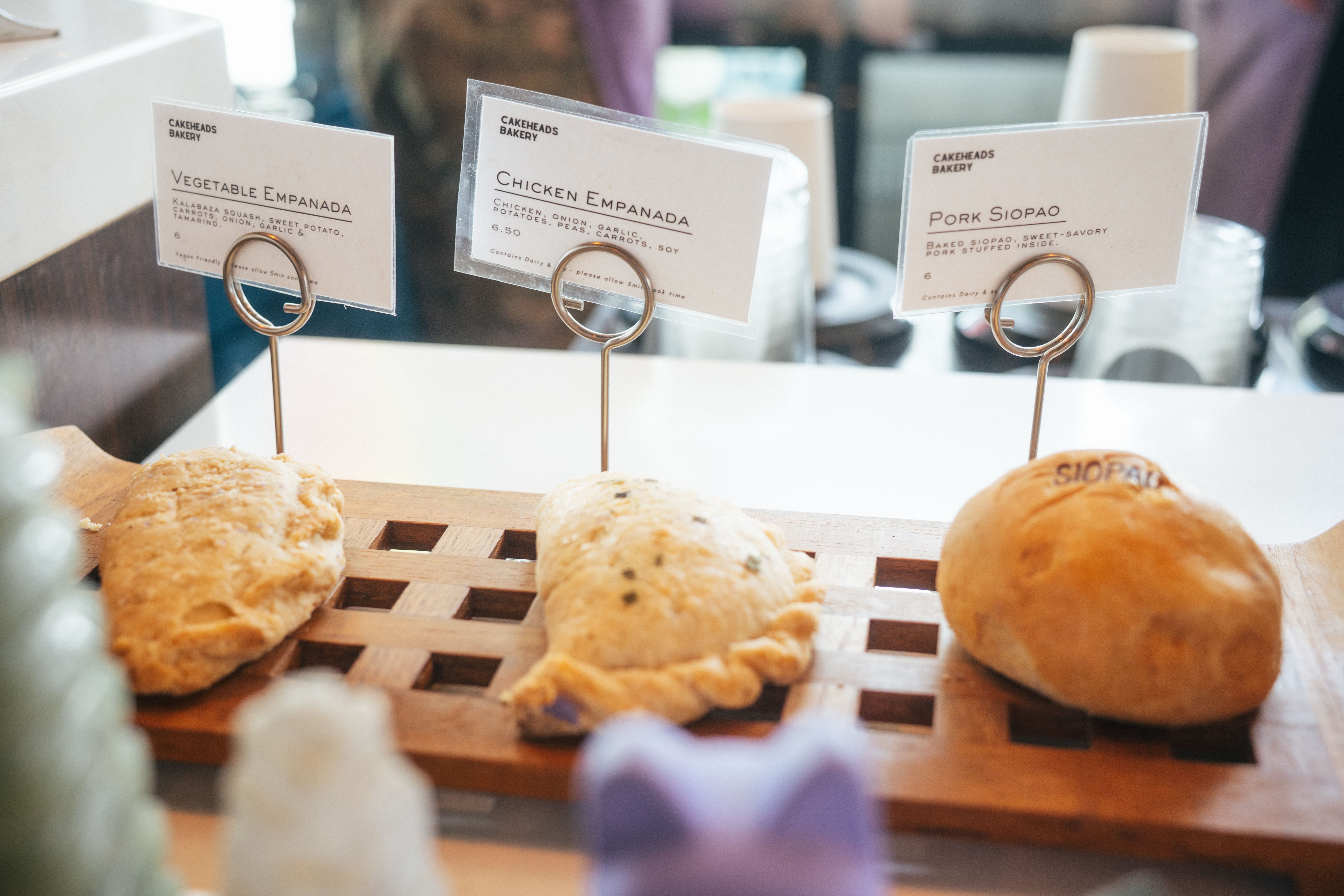
Various Coffee Sarap Snacks

As soon as I ordered this (Boracay Dreams), I wanted to ask: how do you come up with the names? How do they associate with what's in the drink?

That's kind of my piece. I wanted everything to be very intentional. There has to be some kind of Filipino tie to every single drink. The Lola is our matcha latte made with our house-made lavender syrup. The reason is, when we first started this, I made the syrup with lavender from my grandma's house. Palawan and Boracay are our favorite islands, so that's when we created the ube latte and the foams. We do seasonal menus every month, and we try to have some kind of Tagalog name in every single one that has to do with the drink. The Mahal Matcha: mahal of course is love, and it's a strawberry white chocolate matcha. We have our Bigo Dreams: bigo is brokenhearted, like a black heart. That's our ube latte with a black sesame foam. Lila Munsi is our calamansi lemonade. Lila is purple because we add butterfly pea tea to make that purple effect with the calamansi.

For June, we do employee drink month. They R&D all their own drinks. We get all the ingredients they need. They get to be as creative as they want, and it goes on the menu. They also make up the name. One of our staff is Dominican, so she's doing a traditional Dominican drink with orange juice, lime, condensed milk. She's calling it the Mommy because it's her grandma's recipe. We had somebody, Cyrus, who's Irish, called his drink the Luck of the Cyrus. So it's not just Filipino. We want them to put their own culture onto it.

Tell me about the business model from the Philippines you mentioned.

When I went to Palawan, I met up with someone who does sustainable farming. He runs the only organic sustainable farm in Palawan right now. There was a myth going on, passed down for generations after the Spanish colonized, that Palawan was more for fisheries and not for farming. He's ninth generation living there. His dad, his grandpa, everyone always told him the soil just isn't good enough. And when you look at it, there is dry soil. So he got it conditioned in his head. But then he was like, well, it's getting more tourism, they're taking away the water; there has to be something we can do to sustain growing our own food.

So he took a sabbatical with his wife and went all over the Philippines: how are you all making it work, growing these luscious bananas or sugar cane? He took the best practices from each and did it on his own farm. He said it took about two to three years for the soil to come in. The best inspiration was Mother Earth herself. When the leaves fall from the trees, that's how compost is traditionally made. So he made little pods under all the trees to make his own compost. You're supposed to let nature do its course and not mess with it, and it will sustain you. He created tilapia ponds and a hydroponic system, because he lives on a mountain and gets the spring water. In his outdoor house, the wooden beams hold stingless honeybees, indigenous to the Philippines. They make incredible honey, and they're tiny. They pollinate all his flowers, all the hibiscus.

When I told him, I don't know where I want to go with this, but this is how I want to run a business, he said: here's what we could do. One by one hectare of land. We'd sponsor three families to live on it and harvest and plant. Coffee bean trees, cacao, and enough food to sustain the family. That's our economical input. Then after the coffee beans are grown and harvested, that's why I also went to the protected tribe, to meet with the elder there to hand-roast and hand-grind our beans. Then we take it back here and make it an experience. A very niche experience where I want people who buy the ticket to understand how many hands have touched this cup of coffee, and where their dollars are going.

That's my pipe dream right now. I like that bridging. Because if you think about it, we are capitalizing on the flavors we grew up with. But does the Philippines itself benefit? No. So how can we make that work now that globalization is the world we live in? Since we've already kind of connected the borders.
I'd imagine that's more expensive than however you currently source. So you have to think about exporting, and what the cost of the experience here would have to be to make it at least somewhat profitable.

Absolutely. His thing is he doesn't want to do mass production, and I don't want to either. So we're seeing, okay, how much could this generate, how much could we bring? What's the legal limit? Exporting is really expensive. I was like, I gotta get a mule for this.

What's the vision five years out?

Pipe dream vision: I hope to do this five to ten years. Bringing back that business model I was talking about earlier. We hope to expand to where we have a roastery, and that's where we do the experience, so you can see not just this experience but the care into roasting, into really honing in on our flavors. Then making another one of these, but in a community workspace. There'd be a cafe in the space, but also space where community groups can get together. Almost like a nonprofit, but we still have a cafe. Some conference rooms. Even to the point where there's a little daycare, because childcare is always so. One communal workspace where everything is there.

All conversations